
A Story from Chikamatsu (film screening + talk)

- This event has passed.
February 10 @ 6:00 pm - 8:30 pm EST
Details »
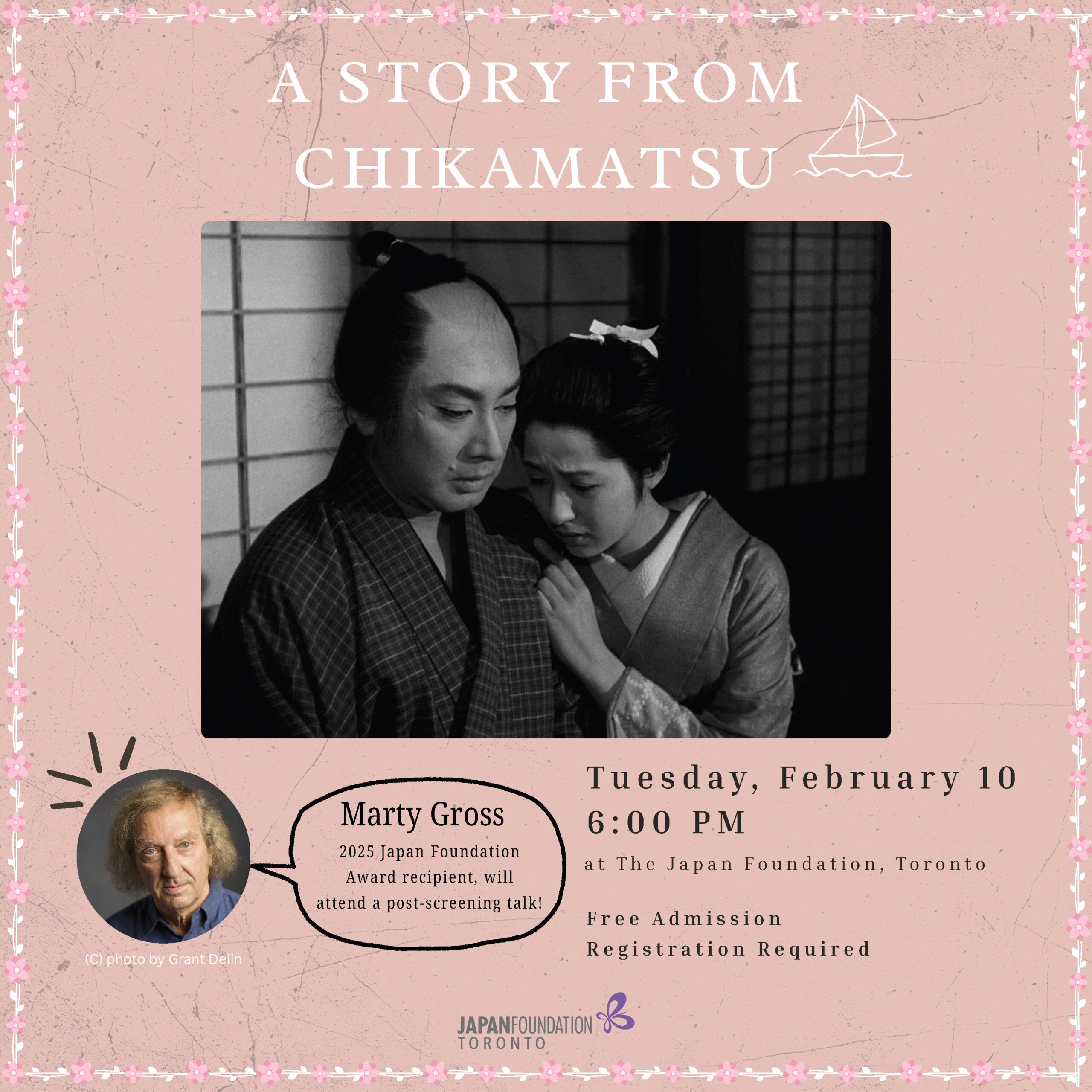
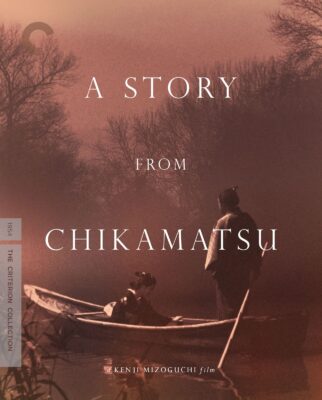 A Story from Chikamatsu
近松物語
Tuesday Feb 10, 6:00PM (ET)
Doors open 5:30PM | Film Screening | In-Person | JFT Event Hall
Directed by MIZOGUCHI Kenji • 1954 • 102 minutes • Presented in Japanese with English subtitles • Trailer
One of a string of late-career masterworks made by MIZOGUCHI Kenji in the first half of the 1950s, A Story from Chikamatsu (a.k.a. The Crucified Lovers) is an exquisitely moving tale of forbidden love struggling to survive in the face of persecution. Adapted from CHIKAMATSU Monzaemon’s 1715 bunraku play, the film traces the injustices that befall a Kyoto scroll maker’s wife and his apprentice after each is unfairly accused of wrongdoing. Bound by fate in an illicit, star-crossed romance, they go on the run in search of refuge from the punishment prescribed them.
Shot in gorgeous, painterly style by master cinematographer MIYAGAWA Kazuo, this delicately delivered indictment of societal oppression was heralded by KUROSAWA Akira as a “great masterpiece that could only have been made by Mizoguchi.”
©Janus Films
After the film, we will screen a 10-minute interview with the lead actress KAGAWA Kyoko, directed by 2025 Japan Foundation Awards recipient Marty Gross, who will join us for a brief conversation on his experiences working with the distributor The Criterion Collection on producing & conducting interviews with Japanese filmmakers.
Free admission. Registration required.
Registration for this event is now full. If you wish to be notified when a cancelled slot becomes available, please join the waitlist on Eventbrite (limited spots). We will also have a rush line before the event to release available seats on a first-come, first-served basis. Admission is not guaranteed. Thank you for your understanding.
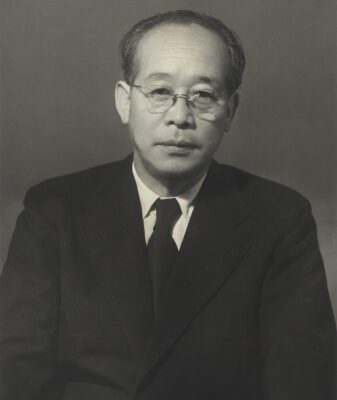 Director Profile:
MIZOGUCHI Kenji (溝口 健二, 1898 – 1956) is one of the most revered masters of Japanese cinema, celebrated for his profound humanism and rigorous visual style. Active from the silent era through the postwar period, Mizoguchi directed more than 80 films, though fewer than half survive today. Initially seeking to become an actor, Mizoguchi joined Nikkatsu as an assistant director, and was later promoted to director. His early works included remakes of German Expressionist cinema, adaptations of Eugene O’Neill and Leo Tolstoy, and a series of left-leaning “tendency films.” While working in Kyoto, he studied kabuki and noh theatre, and traditional Japanese dance and music. In 1939, Mizoguchi became president of the Directors Guild of Japan and released the film The Story of the Last Chrysanthemums, which is regarded by many critics as his major pre-war work.
He came to international prominence in the early 1950s, with films The Life of Oharu (1952), Ugetsu (1953), and Sansho the Bailiff (1954) receiving major awards at the Venice Film Festival, firmly establishing Japanese cinema on the global stage. Drawing from classical literature, historical chronicles, and contemporary social issues, Mizoguchi consistently explored the moral and emotional costs of rigid social hierarchies. Mizoguchi is especially renowned for his compassionate yet unsentimental portrayals of women, whose suffering and resilience lie at the heart of his cinema. His films are marked by long takes, fluid camera movements, and carefully choreographed staging that allow emotional intensity to emerge gradually rather than through overt dramatization. Together with KUROSAWA Akira and OZU Yasujirō, Mizoguchi is seen as a representative of the “golden age” of Japanese cinema.
 Guest Profile:
Marty Gross is a consulting producer for companies based in North America, Europe and Asia, with focus on Japanese art, film, theatre and crafts. His company, Marty Gross Film Productions, Inc. (founded in 1975), manages one of the most comprehensive websites devoted to films on Japanese cultural and historical subjects. Since 1974, he has produced and directed films (including As We Are, Potters at Work, The Lovers’ Exile), restored archival films on Japanese arts and crafts (such as The Leach Pottery, Mashiko Village Pottery, Japan 1937), conducted numerous interviews, produced documentaries and coordinated publication of books on the history of Japanese cinema and on Japanese animation.
© photo by Grant Delin
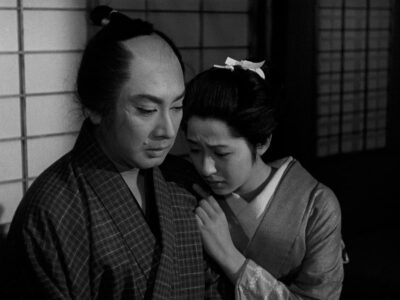
Related programming:
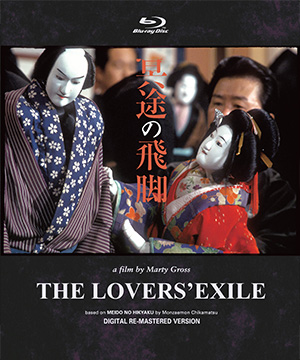
The Lovers’ Exile (film screening + talk)
Saturday, Feb 21, 6:30 PM – 8:30 PM (ET)
In-Person at JFT Event Hall | Admission Free | Registration Required
The Lovers’ Exile is an adaptation of MEIDO NO HIKYAKU by classic Japanese dramatist CHIKAMATSU Monzaemon (1673-1724). The story, one of Chikamatsu’s domestic tragedies, recounts the love between a penniless clerk and an indentured prostitute.
The Lovers’ Exile is performed entirely by the Bunraku Ensemble of Osaka, widely considered the most sophisticated puppet theatre in the world. The Bunraku Theatre Ensemble, and numerous of its players have been declared Living National Treasures of Japan. The Lovers’ Exile is the only filmed adaptation of a classic Bunraku performance.
After the screening, director Marty Gross, the recipient of 2025 Japan Foundation Awards, will join us for a talk and Q&A.
