Harakiri (film screening)

- This event has passed.
January 27 @ 6:00 pm - 8:15 pm EST
Details »
 Harakiri
切腹
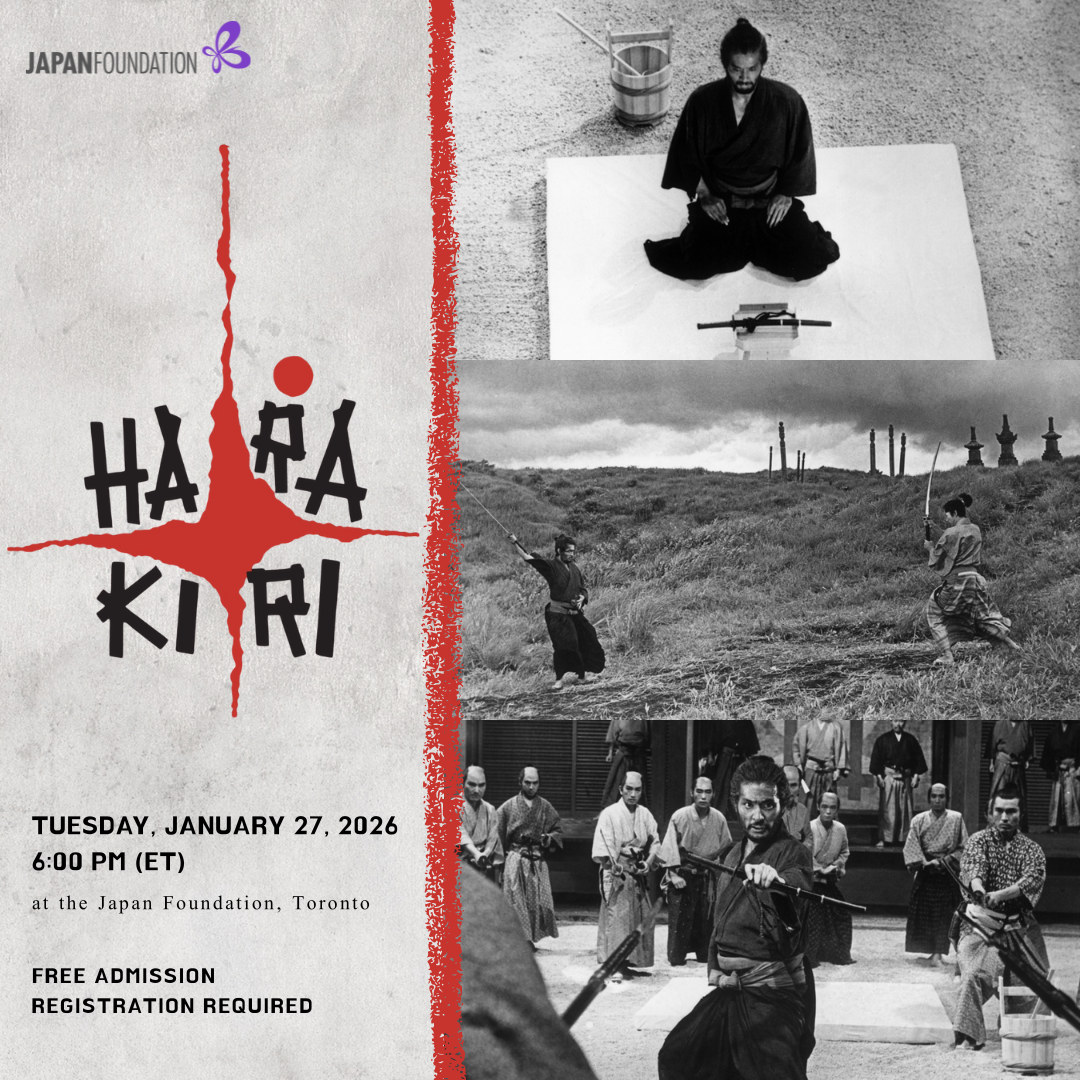
Tuesday January 27, 6:00PM (ET)
Doors open 5:30PM | Film Screening | In-Person | JFT Event Hall
Directed by KOBAYASHI Masaki • 1962 • 133 minutes • Presented in Japanese with English subtitles • Trailer
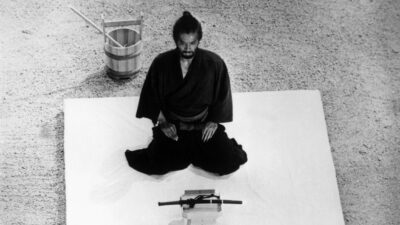
Following the collapse of his clan, an unemployed samurai (NAKADAI Tatsuya) arrives at the manor of Lord Iyi, begging to be allowed to commit ritual suicide on the property. Iyi’s clansmen, believing the desperate ronin is merely angling for a new position, try to force his hand and get him to eviscerate himself—but they have underestimated his beliefs and his personal brand of honor. Winner of the Cannes Film Festival’s Special Jury Prize, Harakiri is a fierce evocation of individual agency in the face of a corrupt and hypocritical system.
©Janus Films
Widely regarded as one of the greatest actors in the history of cinema, NAKADAI Tatsuya collaborated extensively with many of Japan’s best-known and acclaimed directors. In his over seven decade career, he appeared in more than 160 films. According to him, Harakiri was his favourite film of them all. In memory of the unparalleled actor, who passed away on November 8, 2025, JFT is presenting the screening of Harakiri.
Content Warning: This film contains scenes of violence and gore.
Free admission.
This event is now fully booked and registration is closed. We will have a rush line before the event to release available seats on a first-come, first-served basis. Admission is not guaranteed. Thank you for your understanding.
 Director Profile:
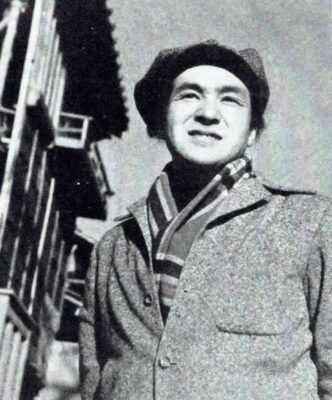
KOBAYASHI Masaki (小林 正樹, 1916-1996) was a Japanese filmmaker who was “one of the finest depicters of Japanese society in the 1950s and 1960s.” Kobayashi started his film career as an assistant at the Shochiku studio, working under KINOSHITA Keisuke (木下 惠介), who was an acclaimed director domestically during the period. While working as an assistant, Kobayashi grew to admire Kinoshita’s skills in directing. The two collaborated on a few projects and Kinoshita helped Kobayashi make some of his earliest films.
In 1957, Kobayashi made Black River, about the crime and prostitution that arose around US bases in Japan during and after the American occupation. This was the first of Kobayashi’s films to star NAKADAI Tatsuya in a major role. Nakadai would become a mainstay of Kobayashi’s film, starring in 9 of Kobayashi’s next 13 films. Starting from 1959, Kobayashi rose to the peak of his career, with the trilogy of epic war dramas The Human Condition (1959-1961) starring Nakadai as a pacifist gradually disillusioned as he goes through various hardships and cruelty during the war. Labelled as “one of the most staggering achievements of Japanese cinema,” the total length of the films is almost ten hours, which makes it one of the longest fiction films ever made for theatrical release.
In 1962, Kobayashi directed Harakiri, which won the Jury Prize at the 1963 Cannes Film Festival. The same year, he also directed The Inheritance, which won the BAFTA United Nations award. In 1964, Kobayashi made Kwaidan, his first color film, a collection of four ghost stories drawn from books by Lafcadio Hearn. Kwaidan won the Special Jury Prize at the 1965 Cannes Film Festival, and received an Academy Award nomination for Best Foreign Language Film.